
With AI at our hands, all of us getting faster at turning ideas into working solutions. We all know and feel that by now.
For companies facing shorter cycles of disruption and renewal, that opens up more possibilities to put technology to use. But it also puts more pressure onto the whole process from discovery and design till development and deployment.
This changes where the difficult work sits. When coding and deployment become easier, the bottleneck shifts toward understanding the problem, the user, the market, and the business.
That understanding shapes which use cases we identify, how we define them, and where we put our effort.
Most companies already have plenty of AI and use case ideas. They’re often hidden in strategy decks, spreadsheets, and workshop notes. The question is:
“Which AI use cases fits our business, and which should come first?”
Our new Catalyst for Data & AI Use Case Ideation helps teams work through that question.
You can start with an empty Miro board and add the material you already have. Or, you can use our starting template for the Catalyst.
All of your strategy decks, reports, spreadsheets, and notes need no special preparation for the workflow. The Catalyst uses them as the starting point for understanding your business.
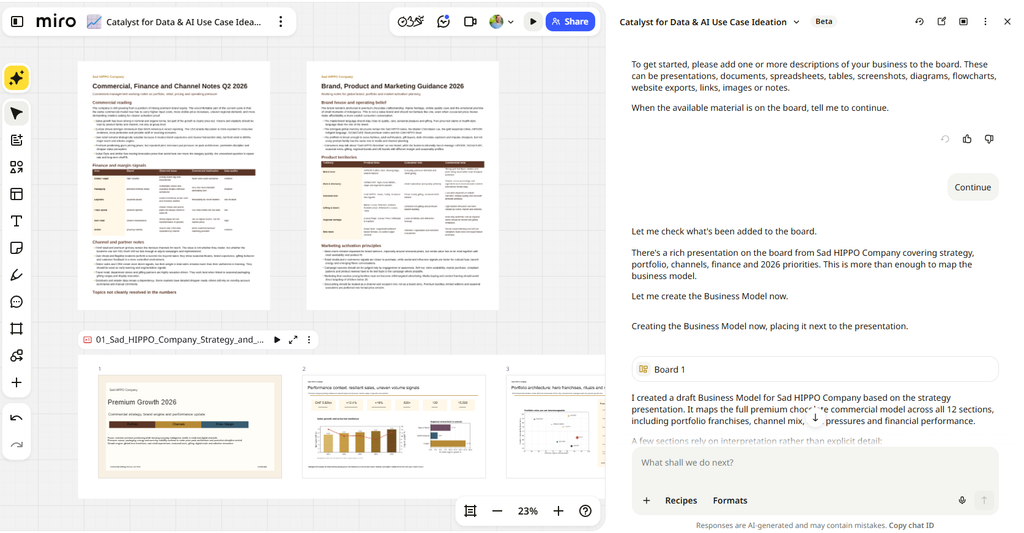
Start with the business
The Catalyst first maps your business into a Business Model Canvas. This gives the team a shared view of the business before generating use cases.
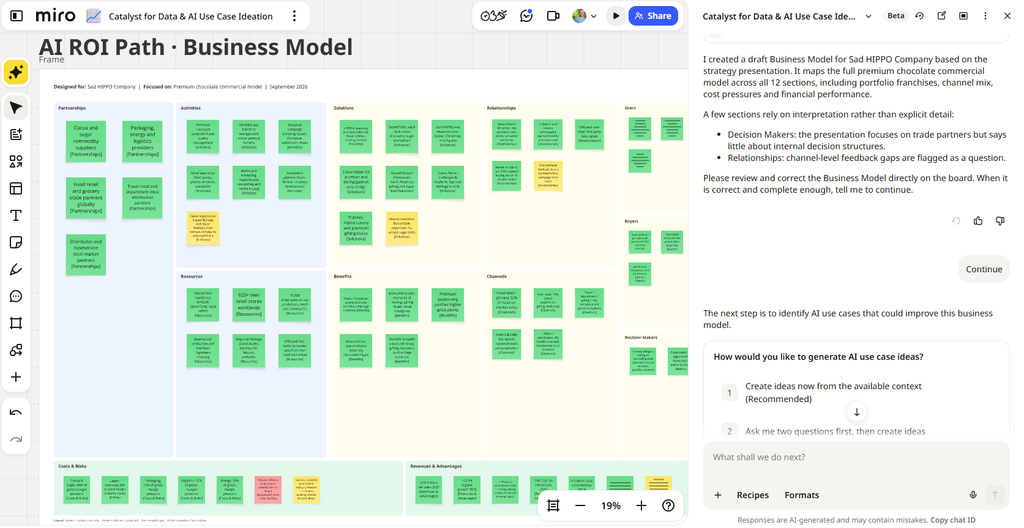
Your team should review and correct that model before continuing. Does it reflect how the business works? Every later step draws on it, so this review helps keep the ideas grounded in your company’s circumstances.
The Catalyst handles the initial mapping. Your team checks the result and stays in control of what follows.
Explore where AI could help
With the business model in place, the Catalyst develops concrete AI use cases. Each idea connects to a relevant part of the business, making it easier to discuss what it would do and where it could create value.
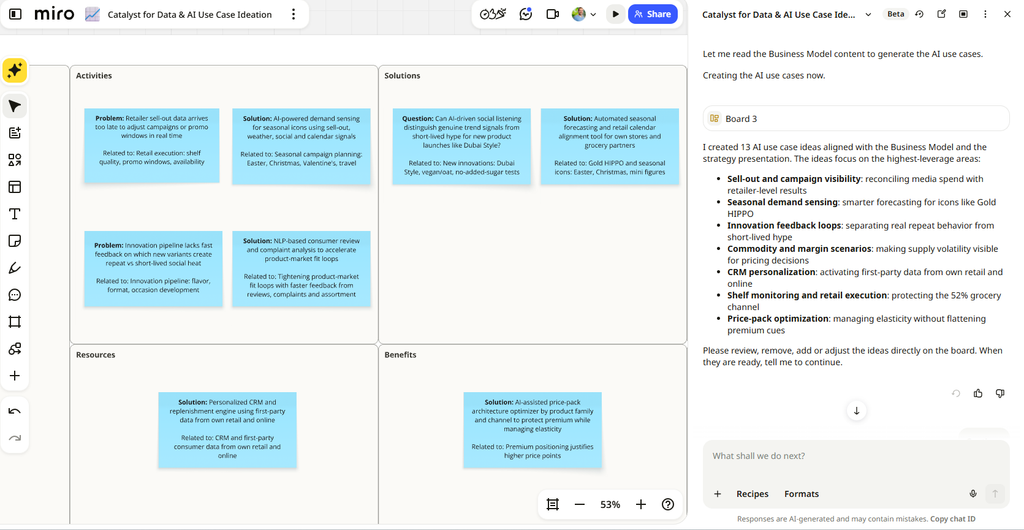
You can choose how to approach this. Let the Catalyst suggest use cases, work through a few questions, or involve more people through a short survey. The team can contribute its knowledge as the ideas take shape.
Decide what to pursue
Once you have a set of use cases, you need a basis for comparing them.
The Catalyst can provide a quick ROI estimate or use company figures for a more detailed financial assessment. This helps the team examine the potential of each idea alongside its uncertainties and dependencies.
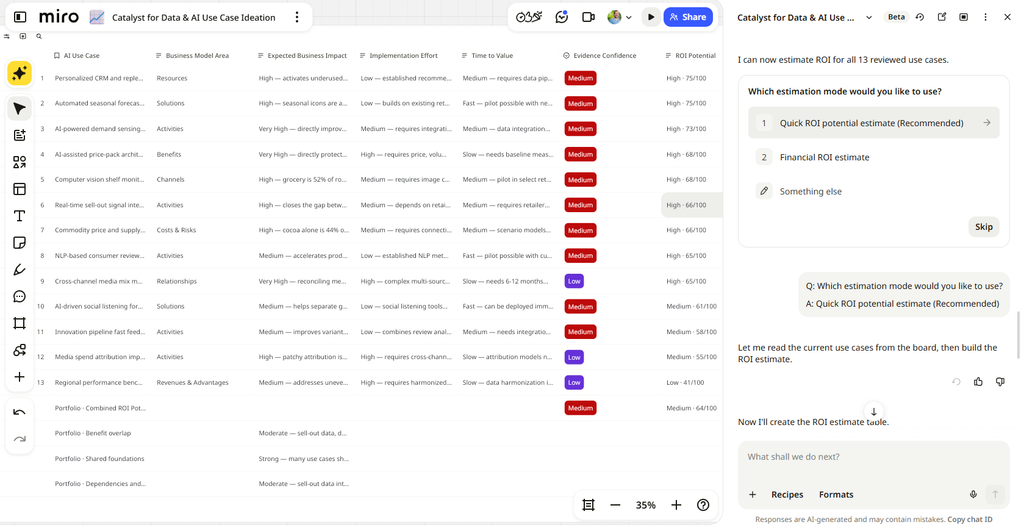
The comparison can also reveal use cases that share the same foundation, giving the team another factor to consider when deciding where to start.
Bring the work together
At the end, the Catalyst assembles the business model, use cases, ROI considerations, assumptions, risks, and next steps into one documented handoff.
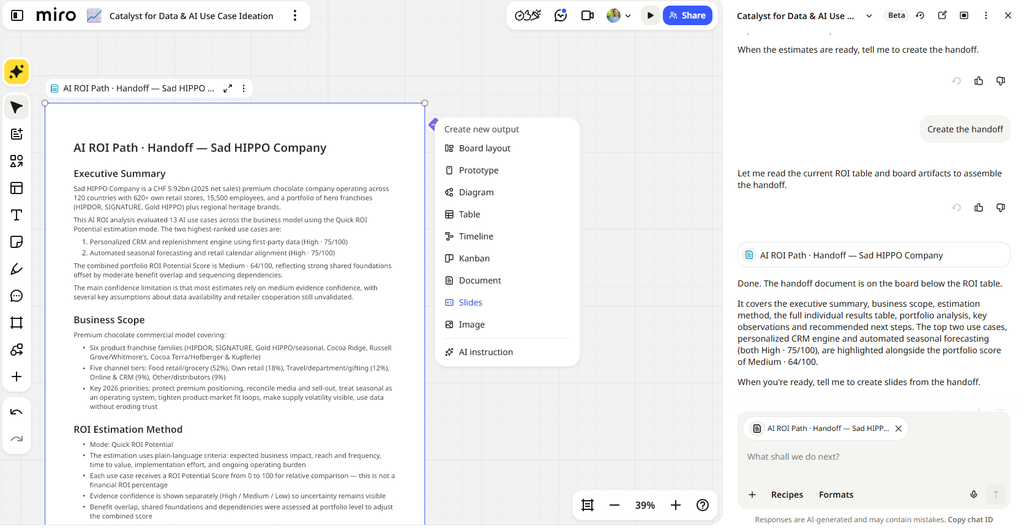
Your team can share the work and continue from it, with the reasoning behind the priorities available alongside the ideas themselves.
You decide the workflow!
As you can see, the process can take anywhere from about 30 minutes to two hours, depending on how much human input and review you consider necessary. You can work through it together in a live session or contribute asynchronously.
The accompanying template includes a five-minute Talk Track that walks you through the process from start to finish. Try the Catalyst with your own material, and join our community to share your experience. We’re continuing to develop the Catalyst and would love to hear what works for you and what could be better.

